
HEARTH team global outlets and news spotlight extreme heat risks
The HEARTH team’s expert analysis of climate adaptation and public health has dominated high-profile news broadcasts and international publications during recent extreme weather events.
The widespread media appearances highlight how the team is leading the global narrative on urban heat mitigation, public health equity, and built environment infrastructure. These media contributions collectively showcase the HEARTH team's profound impact on shaping public policy and public awareness as they continue their core mission to protect urban healthcare estates and underserved communities from systemic climate threats.
Professor Anna Mavrogianni was featured across several leading global outlets:

The New York Times (27 June 2026), "Europe’s Trains, Nuclear Plants and Factories Can’t Take the Heat Either": Lent her expertise to a deep dive into how legacy public infrastructure—including European rail networks, factories, and nuclear facilities—is fundamentally unprepared for compounding climate stresses.

BBC News (26 June 2026), "Heatwave caution urged as London pavements hit 57C" : Commented on thermal images showing London pavements hitting 57°C, noting that they "help us think about heat risks differently." She warned of the dangers of such hot surfaces, advising the public to assess heat exposure in playgrounds and public spaces before visiting with children or pets. Emphasising that overheating is a "public health and social justice issue," she called for embedding climate resilience into urban design using greenery, shading, and reflective materials in an inclusive manner to protect the most vulnerable groups.

Reuters (26 June 2026), "Hot and stuck in Paris and London: homes not built for heat": Highlighted the urgent need to "stop the heat getting in", explaining that many European homes are still designed primarily to retain heat in winter. While acknowledging that climate change can still bring harsher winters, she noted that heavy thermal insulation becomes unwelcome in torrid summers. To help buildings stay cool, she urged the adoption of external shutters, roof overhangs, recessed balconies, better ventilation, reflective surfaces, and urban greening, pointing out that the simplest measure is reducing direct sunlight through external shading.
The Atlantic (26 June 2027), "Europe’s Come-to-AC Moment": Detailed Europe's complex relationship with traditional passive cooling versus the rapid, necessary shift toward smarter urban design, street canopy shading, and air conditioning integration.
During a BBC World News 6 pm broadcast on 23 June 2026, Dr Clare Heaviside provided vital context on urban heatwaves, emphasising why large-scale urban adaptation frameworks are urgently required to safeguard vulnerable populations.
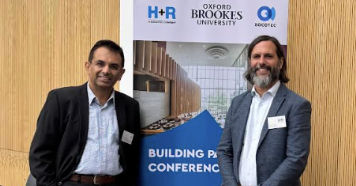
Professor Rajat Gupta, recently featured on the Making Housing Better podcast following his keynote at the Healthy Homes Hub Summer Ideas Exchange to discuss how the HEARTH programme is tackling indoor overheating.
In the episode, he highlighted the urgent challenge of balancing winter energy efficiency and Net Zero retrofit goals with summer climate resilience, emphasising how HEARTH’s cross-disciplinary research is generating the practical, "region to room" solutions needed to protect vulnerable residents.
You can listen to the full discussion via the Making Housing Better Podcast.


Comments